Description
Contents
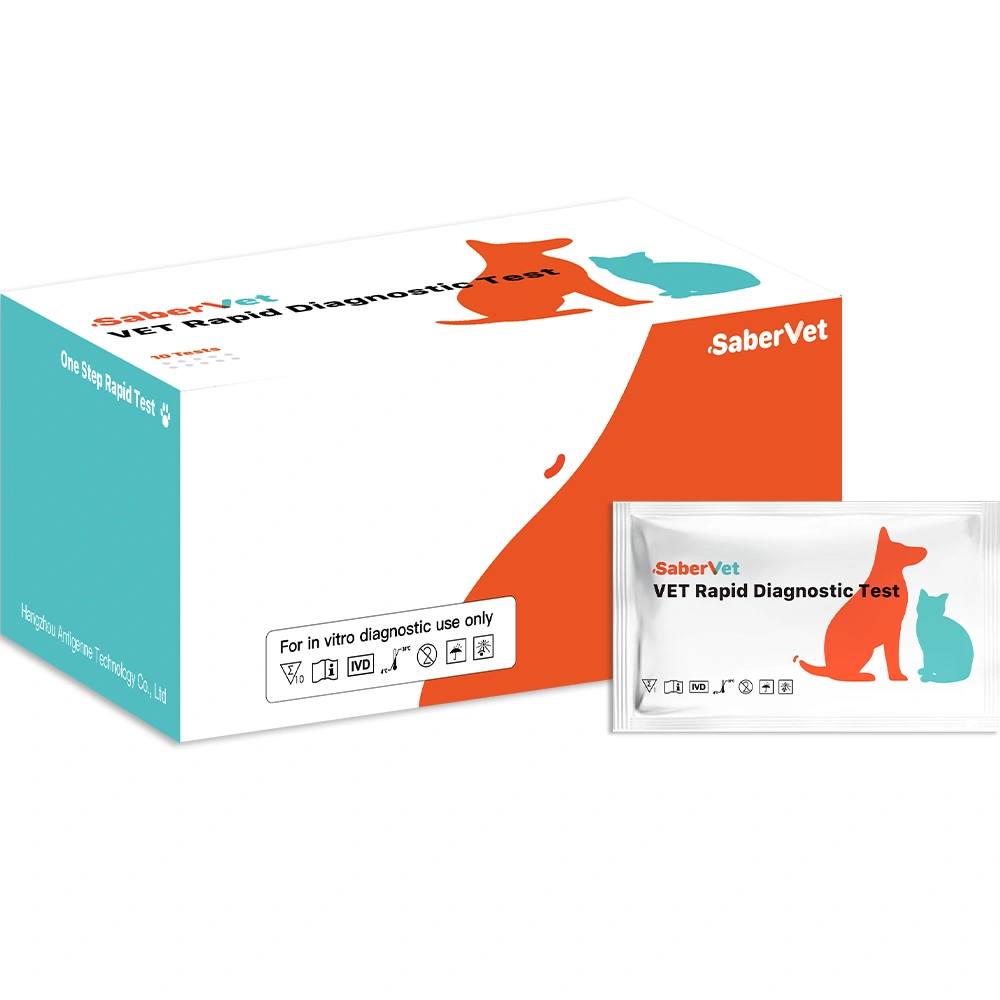
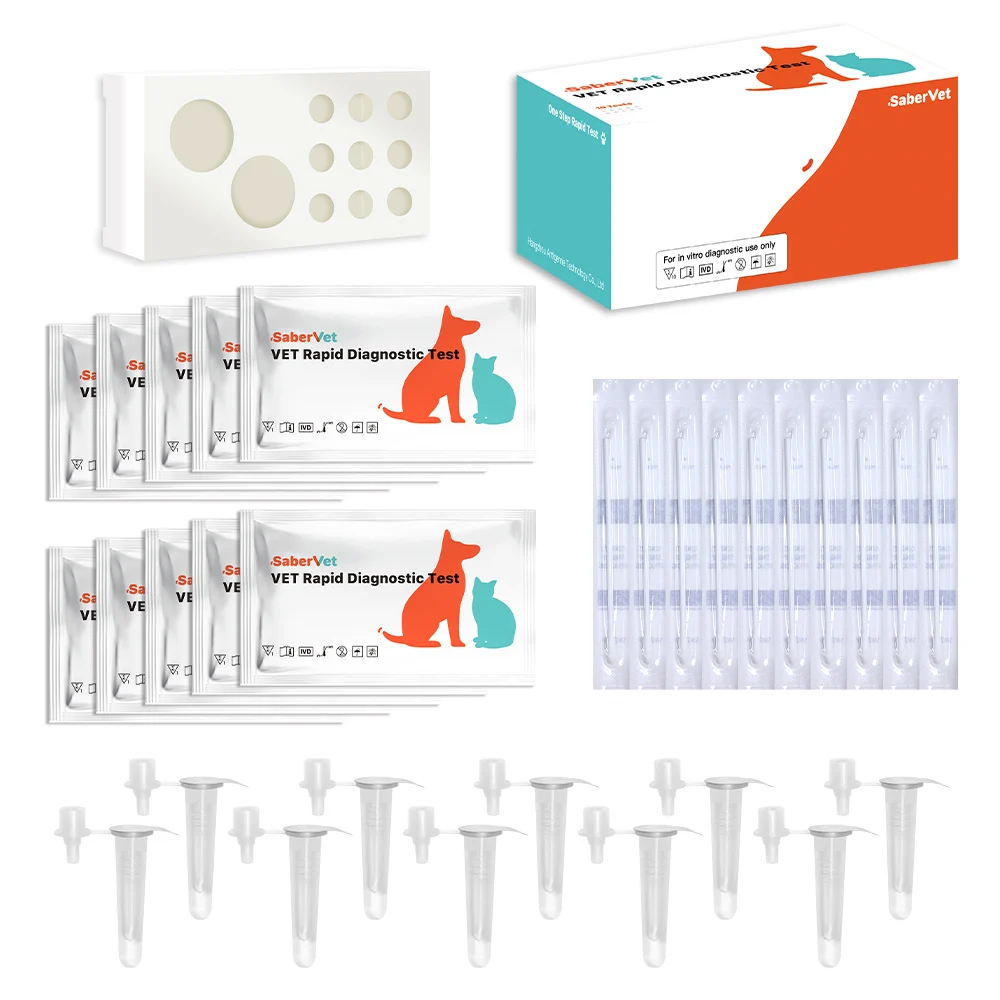
| Component | 10T/Box |
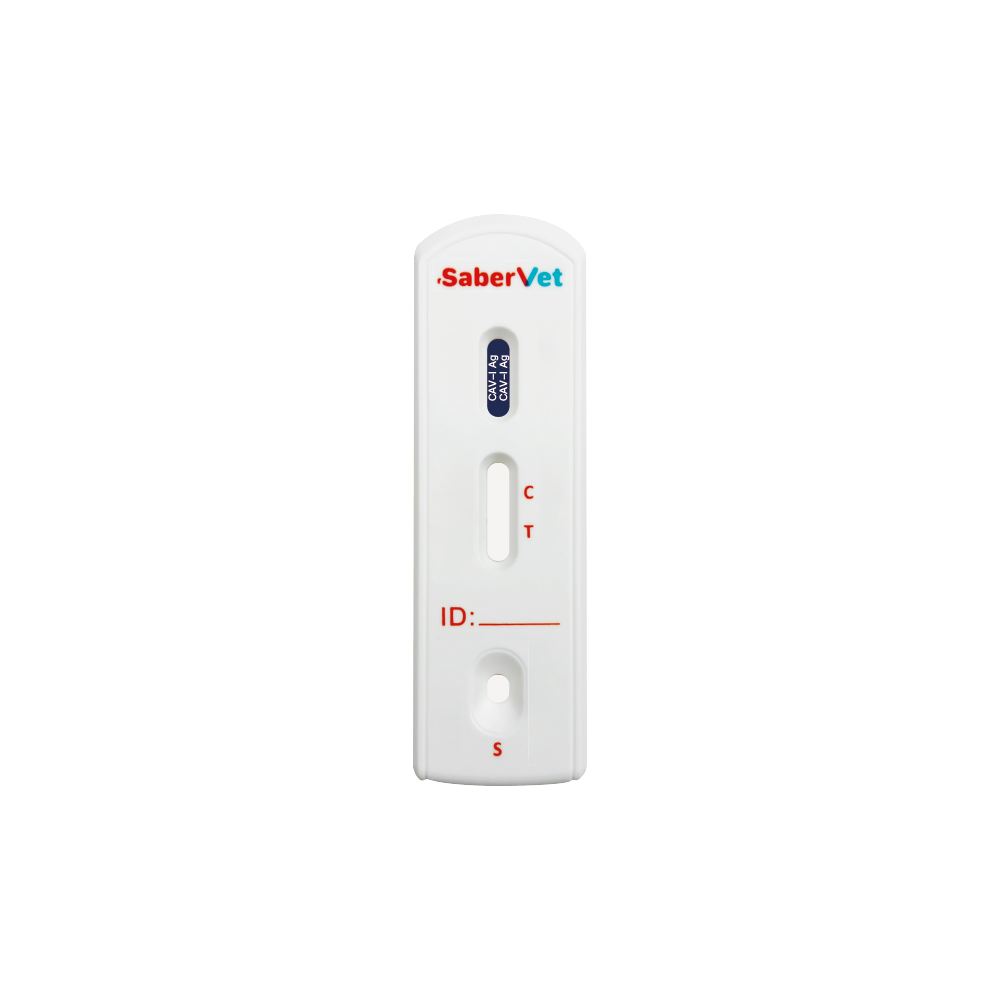
| Test device | 10 piece |
| Swab | 10 piece |
| Buffer | 10 piece |
Specifications
| Product name | SaberVet Canine Adenovirus 1 Antigen Rapid Test |
| Brand Name | Sabervet |
| Model Number | 1091092410 |
| Specimen | Secretions |
| Application | Vet Health Diagnosis |
| Sensitivity | 99.80% |
| Specificity | 97.69% |
| Certificate | GMP & ISO9001 & CE |
| Assay Time | 10 Minutes |
| OEM&ODM | Available |
| Shelf Life | 3 Years |
Canine adenovirus is the causative agent of canine infectious hepatitis and is the most pathogenic and widely infectious mammalian adenovirus found. Canine adenovirus is categorized into 2 serotypes: type I and type II.
- Clinical symptoms
Clinical signs of canine adenovirus type I (CAV-I) infection may include fever, loss of appetite, vomiting, diarrhea, jaundice, hemorrhage, and leukopenia. Hepatitis lesions such as liver enlargement, thickening of the gallbladder wall, hemorrhage, and a blackish-red coloration have been seen in some cases. In addition, corneal edema, clouding and bluish coloration of the cornea may occur in the eyes, which is called "blue eye disease".
- Transmission
Canine adenovirus type I is not airborne, but is mainly transmitted through the digestive tract, with sick dogs and infected dogs being the main sources of infection. The secretions and excretions of sick dogs contain the virus, and recovering dogs with the virus can excrete the virus in their urine for a long time, and placental infection is also possible. In addition, the virus may also invade the host through broken mucous membranes and skin.
- Clinical diagnosis
Clinical diagnosis usually depends on the history, clinical signs and symptoms. Laboratory diagnostic methods include blood biochemical analysis, PCR testing, and virus isolation. Blood biochemical analysis can show elevated liver enzyme levels, PCR can directly detect viral nucleic acids, and virus isolation can be used to confirm the presence of the virus.
- Preventive measures
Preventive measures include regular vaccination of dogs to boost their immunity and reduce the risk of infection. Vaccination is usually started when the dog is a puppy and follows the immunization schedule. For dogs that are already infected, treatment is mainly symptomatic, such as rehydration, hemostasis and liver preservation, as well as prevention of secondary infections.
Due to the transmissible nature of canine adenovirus type I, it is very important to maintain good personal hygiene and clean the kennel regularly. Avoid contact with suspected infected persons and promptly isolate sick dogs when signs of infection are detected to minimize the spread of the virus.
- Canine Adenovirus I Antigen Rapid Test
Antigenne has developed a Canine Adenovirus I Antigen Rapid Test for detecting canine secretion samples, which is fast, easy to operate and highly accurate, and can be used as an effective means for users to detect whether their dogs are suffering from canine infectious hepatitis.