

Descripción
Contenido
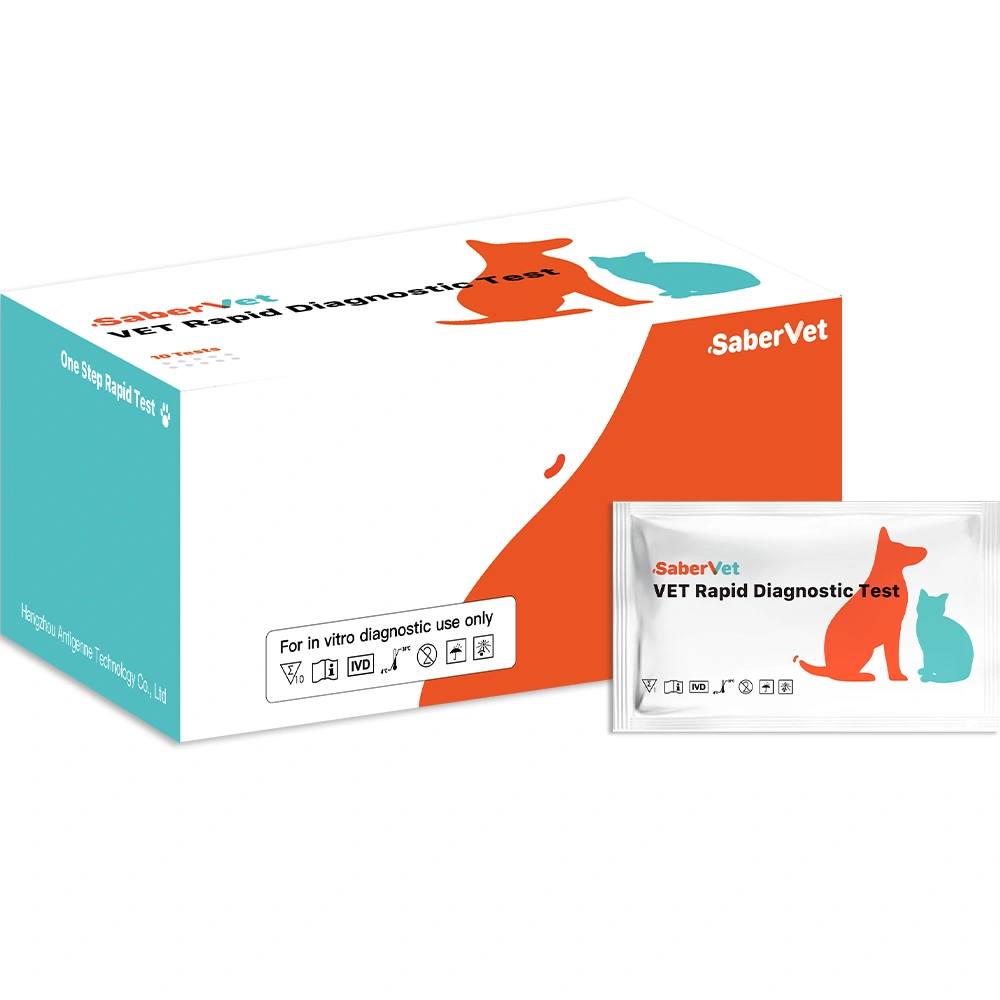
| Componente | 10T/Caja |
| Dispositivo de prueba | 10 piezas |
| Hisopo | 10 piezas |
| Tampón | 10 piezas |
Especificaciones
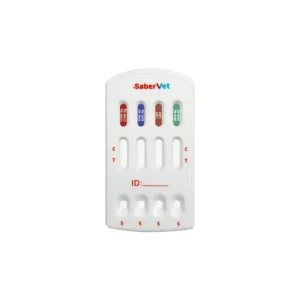
| Nombre del producto | SaberVet Canine Distemper Virus/Parvovirus/Coronavirus/Giardia Antigen Combo Rapid Test |
| Marca | Sabervet |
| Número de modelo | 1091794710 |
| Muestra | Secretions&Feces |
| Aplicación | Diagnóstico veterinario |
| Sensibilidad | 99.80% |
| Especificidad | 97.69% |
| Certificado | GMP & ISO9001 & CE |
| Tiempo de ensayo | 10 minutos |
| OEM&ODM | Disponible |
| Vida útil | 3 Years |
Canine distemper virus, canine Parvovirus, canine coronavirus, and Giardia flagellosa are four infectious gastrointestinal pathogens commonly found in dogs.
Similitudes
Vía de transmisión:
All are spread through direct contact with body fluids (e.g. saliva, faeces, urine), contaminated environments or objects from infected animals.
Síntomas:
Both may cause gastrointestinal symptoms such as vomiting and diarrhoea.
Both may cause loss of appetite, lethargy and weight loss.
Prevención:
The main way to prevent all of these diseases is to get vaccinated (for viral diseases).
Maintain good hygiene practices, avoid contact with infected animals, and make sure water and food are clean.
Differences
Specific symptoms:
Canine distemper virus: in addition to respiratory symptoms (e.g. coughing, nasal discharge) and gastrointestinal symptoms (e.g. vomiting, diarrhoea), it can cause neurological symptoms (e.g. spasms, convulsions, seizures) as well as the "sclerodactyly" symptom (hardening of the foot pads).
Canine Parvovirus: Severe gastrointestinal symptoms, especially haemorrhagic enteritis (severe diarrhoea with blood), accompanied by severe dehydration and electrolyte imbalance.
Canine Coronavirus: causes mainly mild to moderate gastrointestinal symptoms, which are usually milder than those of canine microvirus infections, and are mainly manifested by diarrhoea and vomiting.
Giardia: mainly causes intermittent diarrhoea with fatty and foul smelling faeces, which may lead to chronic gastrointestinal distress.
Métodos de detección
Canine distemper virus:
PCR test: detects RNA of Canine Distemper Virus.
Serological tests: Detection of antibodies to canine distemper virus, e.g. ELISA.
Immunofluorescence: Detection of viral antigens in nasal, conjunctival or blood samples.
Canine Parvovirus:
PCR test: detects DNA of canine parvovirus.
Rapid antigen test: Detection of viral antigen in faeces using rapid test strips (ELISA).
Serological Test: Detects antibody levels to Canine Parvovirus.
Canine Coronavirus:
PCR test: Detection of RNA of Canine Coronavirus.
Rapid antigen test: Detection of viral antigen in faeces using rapid test strips (ELISA).
Virus isolation: isolation of virus from faecal samples for testing.
Giardia:
Microscopic examination: observation of Giardia flagellata cysts or trophozoites directly in a stool sample.
ELISA: Detection of Giardia antigens.
Immunofluorescence: Detection of Giardia antigen in faeces using fluorescent antibody technique.
PCR: Detection of Giardia DNA.
Canine Distemper Virus/Parvovirus/Coronavirus/Giardia Antigen Combo Rapid Test
Antigenne has developed the Canine Distemper Virus/Parvovirus/Coronavirus/Giardia Antigen Combo Rapid Test to help users more accurately diagnose whether a dog is infected with these diseases and to develop appropriate treatments and preventive measures to protect the health of the dog.