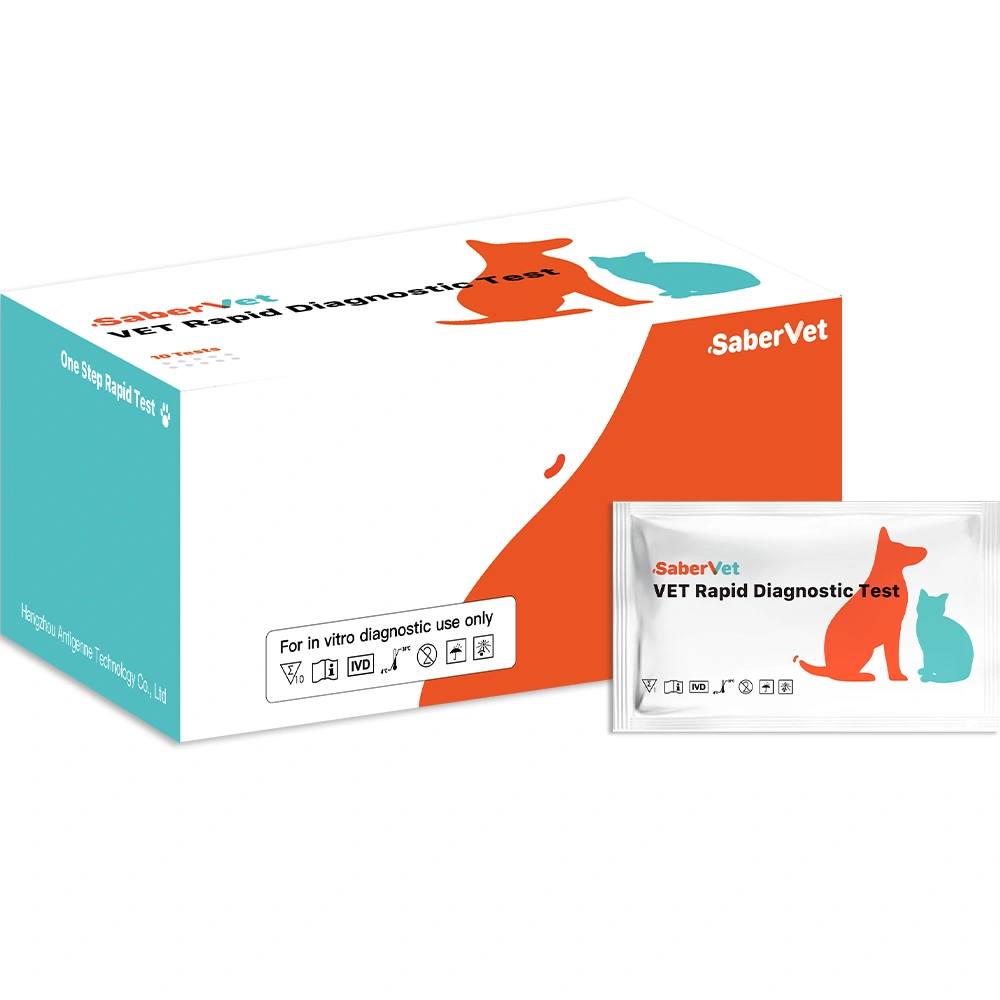

Description
Contents
| Component | 10T/Box |
| Test device | 10 piece |
| Swab | 10 piece |
| Buffer | 10 piece |
Specifications
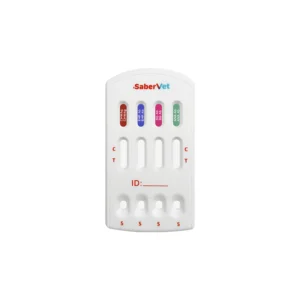
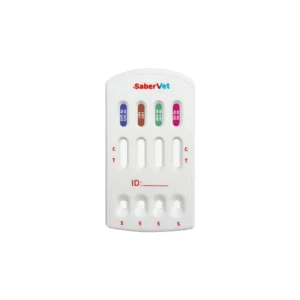
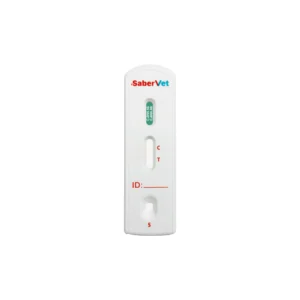
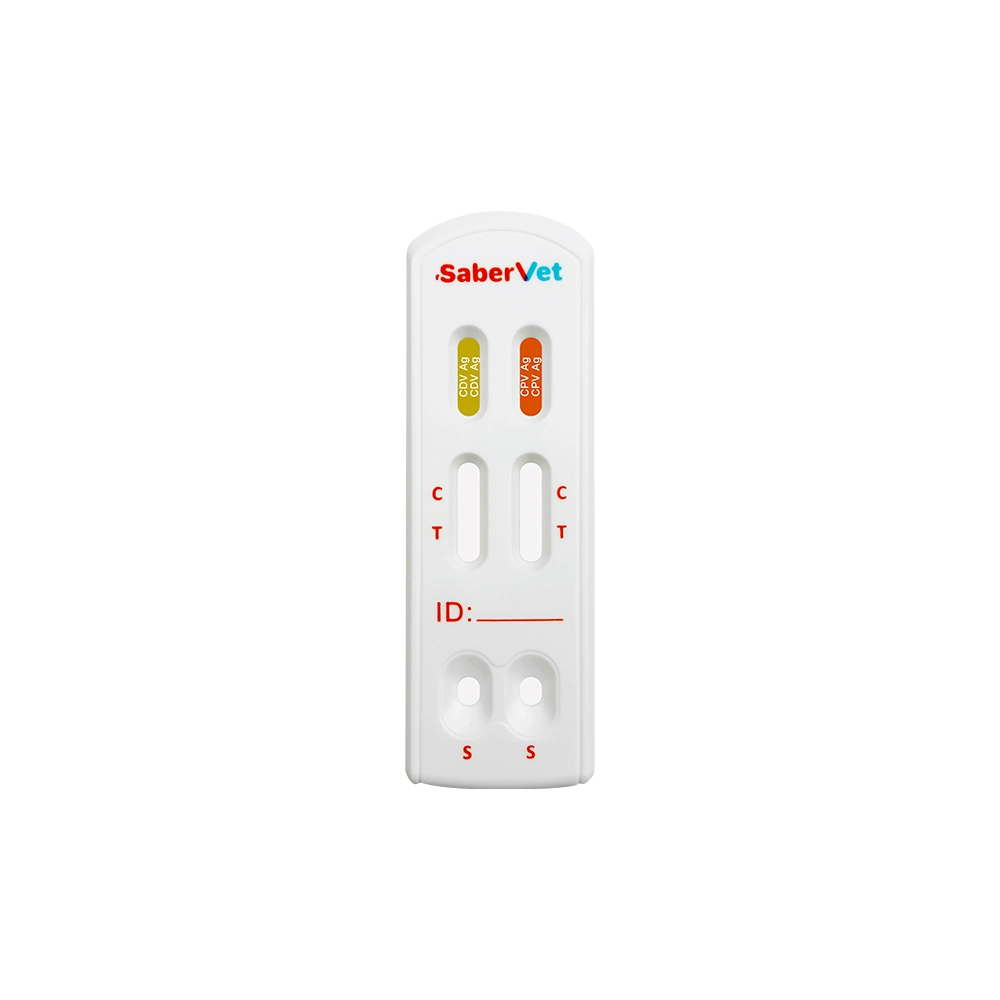
| Product name | SaberVet Canine Distemper Virus/Parvovirus Antigen Combo Rapid Test |
| Brand Name | Sabervet |
| Model Number | 1091794710 |
| Specimen | Secretions&Feces |
| Application | Vet Health Diagnosis |
| Sensitivity | 99.80% |
| Specificity | 97.69% |
| Certificate | GMP & ISO9001 & CE |
| Assay Time | 10 Minutes |
| OEM&ODM | Available |
| Shelf Life | 3 Years |
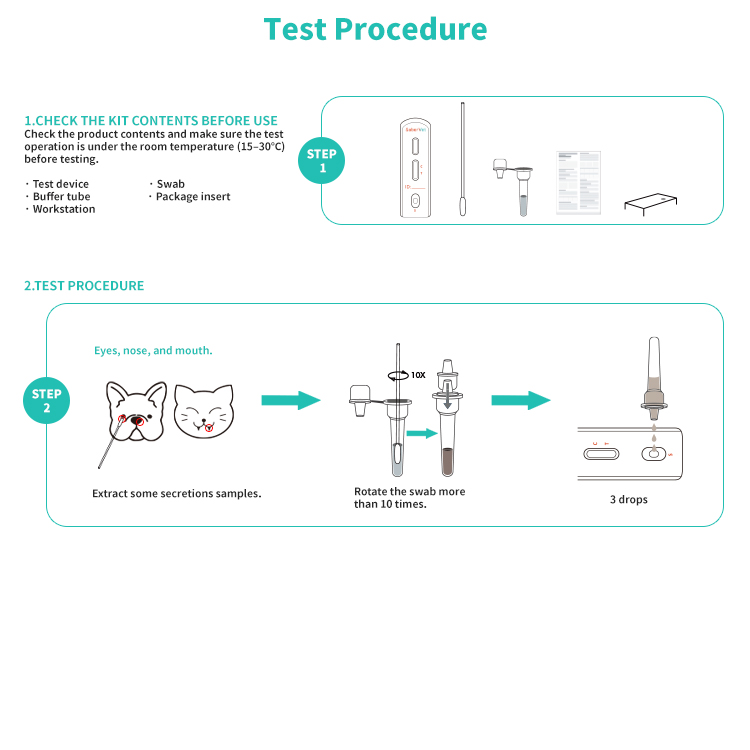
Operation
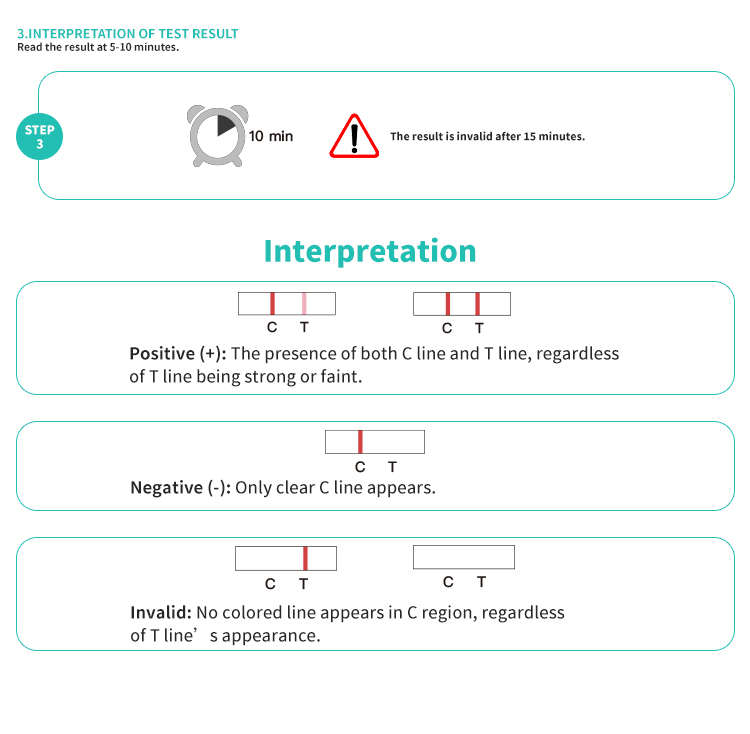
Results
Canine distemper virus and Canine Parvovirus are two viruses that pose a significant threat to canine health. Because they are highly contagious and lethal, early diagnosis and timely treatment are critical.
- Canine Distemper Virus and Canine Parvovirus
Canine distemper virus (CDV): Canine distemper virus is an RNA virus of the family Paramyxoviridae.
Transmission: mainly through airborne droplets, but also through direct contact.
Clinical symptoms: manifested as fever, loss of appetite, respiratory symptoms (e.g., coughing, nasal discharge), digestive symptoms (e.g., vomiting, diarrhea) and neurological symptoms (e.g., convulsions, paralysis).
Canine Parvovirus (CPV): Canine poliovirus is a DNA virus of the poliovirus family.
Transmission: Mainly through the fecal-oral route, but also through contaminated items and the environment.
Clinical symptoms: manifested by severe gastrointestinal symptoms (e.g., severe vomiting, bloody diarrhea, dehydration) and acute myocarditis (mostly seen in puppies).
- The significance of joint testing
Combined detection of canine distemper virus and Canine Parvovirus is of great significance
Rapid diagnosis: Early and accurate diagnosis improves the success of treatment and reduces the spread of the virus.
Reduced cost: A single test can screen for both viruses at the same time, reducing testing costs and time.
Accurate treatment: based on the test results, veterinarians can develop targeted treatment programs to improve the effectiveness of treatment.
- Combined testing methods
The following methods are commonly used for combined testing:
Rapid Diagnostic Test
Based on immunochromatographic technology, samples from dogs (e.g. blood, feces) are added dropwise to test strips, and CDV and CPV are detected by antigen-antibody reaction.
Enzyme-linked immunosorbent assay (ELISA): Determines infection by detecting viral antigens or antibodies in canine serum.
Polymerase Chain Reaction (PCR): Detects viral DNA (CPV) or RNA (CDV) in dogs by amplifying specific nucleic acid fragments of the virus.
- Canine Distemper Virus/Parvo Virus Antigen Combo Rapid Test
Antigenne has developed an antigen test for the detection of Canine Distemper & Canine Parvovirus (CPV). This test can detect both canine distemper and Canine Parvovirus at the same time, and through the combined detection, it can help users realize the early detection and timely intervention of canine distemper virus and Canine Parvovirus, effectively reduce the morbidity and mortality of canine diseases, and protect the health of dogs.
Canine Distemper Virus /Parvovirus Antigen Combo Rapid Test offered by Antigenne is a lateral flow immunoassay intended for the qualitative detection of specific antigen from Canine Distemper virus (CDV) in eye,nasal fluid or saliva sample and canine Parvovirus (CPV) in fresh feces or rectal swab sample. The test is useful for determination of CDV/CPV infection.
Canine distemper virus and Canine Parvovirus are two viruses that pose a significant threat to canine health. Because they are highly contagious and lethal, early diagnosis and timely treatment are critical.
- Canine Distemper Virus and Canine Parvovirus
Canine distemper virus (CDV): Canine distemper virus is an RNA virus of the family Paramyxoviridae.
Transmission: mainly through airborne droplets, but also through direct contact.
Clinical symptoms: manifested as fever, loss of appetite, respiratory symptoms (e.g., coughing, nasal discharge), digestive symptoms (e.g., vomiting, diarrhea) and neurological symptoms (e.g., convulsions, paralysis).
Canine Parvovirus (CPV): Canine poliovirus is a DNA virus of the poliovirus family.
Transmission: Mainly through the fecal-oral route, but also through contaminated items and the environment.
Clinical symptoms: manifested by severe gastrointestinal symptoms (e.g., severe vomiting, bloody diarrhea, dehydration) and acute myocarditis (mostly seen in puppies).
- The significance of joint testing
Combined detection of canine distemper virus and Canine Parvovirus is of great significance
Rapid diagnosis: Early and accurate diagnosis improves the success of treatment and reduces the spread of the virus.
Reduced cost: A single test can screen for both viruses at the same time, reducing testing costs and time.
Accurate treatment: based on the test results, veterinarians can develop targeted treatment programs to improve the effectiveness of treatment.
- Combined testing methods
The following methods are commonly used for combined testing:
Rapid Diagnostic Test
Based on immunochromatographic technology, samples from dogs (e.g. blood, feces) are added dropwise to test strips, and CDV and CPV are detected by antigen-antibody reaction.
Enzyme-linked immunosorbent assay (ELISA): Determines infection by detecting viral antigens or antibodies in canine serum.
Polymerase Chain Reaction (PCR): Detects viral DNA (CPV) or RNA (CDV) in dogs by amplifying specific nucleic acid fragments of the virus.
- Canine Distemper Virus/Parvo Virus Antigen Combo Rapid Test
Antigenne has developed an antigen test for the detection of Canine Distemper & Canine Parvovirus (CPV). This test can detect both canine distemper and Canine Parvovirus at the same time, and through the combined detection, it can help users realize the early detection and timely intervention of canine distemper virus and Canine Parvovirus, effectively reduce the morbidity and mortality of canine diseases, and protect the health of dogs.