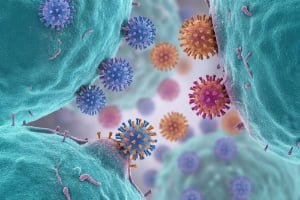
The rising threat of <a href="https://www.vet.cornell.edu/departments-centers-and-institutes/baker-institute-animal-health/animal-health-articles/canine-parvovirus”>canine parvovirus</a> is alarming. However, ongoing advancements in treatment protocols for <a href="https://www.antigenne.com/”>parvovirus in dogs</a> bring hope. Optimizing traditional and novel therapies significantly boosts survival rates.
Standard treatments for parvovirus, such as fluid therapy, antibiotics, and supportive care, remain effective. However, combined with new interventions like monoclonal antibodies, outcomes improve significantly. Early diagnosis paired with structured care is crucial for recovery.
<h2>What are the current standard treatments for parvovirus?</h2>
Traditional approaches still prevail. These include IV fluids, antiemetics, nutritional support, and antibiotics. These strategies manage symptoms and prevent secondary infections for <a href="https://www.antigenne.com/product/”>parvovirus canine</a>.
Though basic, these treatments are critical in the initial care of parvovirus-infected dogs. By stabilizing vital parameters and managing dehydration, veterinarians give these patients a fighting chance. <img src="http://itgen-n8n.oss-us-west-1.aliyuncs.com/images/2025-11-06/e54f45ee-4d7b-450d-9bd7-6c54f25ef884-767f552d6b414ea59f8476c4d4f92fd3.png" alt="Standard parvovirus care: IV fluids, antiemetics, antibiotics, and supportive therapy. Essential for recovery. Photographic image of a veterinarian gently attending to a small puppy receiving intravenous fluids in a clean, modern veterinary clinic. Soft, natural lighting. Realistic, caring scene.">
As treatment protocols evolve, combining these standard methods with emerging personalized care techniques is logical. Understanding each component’s role aids in crafting a holistic treatment plan. Standard treatments lay the groundwork, ensuring the dog is stable enough to receive innovative therapies.
<h2>What breakthroughs are emerging from novel therapies?</h2>
Innovative solutions are shifting paradigms. <a href="https://www.avma.org/news/new-monoclonal-antibody-canine-parvovirus-gets-conditional-license”>Monoclonal antibodies</a> and <a href="https://www.vetfolio.com/learn/article/recombinant-feline-interferon-omega-in-the-treatment-of-canine-parvovirus-infection”>recombinant interferons</a> show promise in targeting the virus directly.
These therapies enhance the immune response and reduce viral load, offering a new line of defense. Patients receiving these treatments often experience quicker recovery. <img src="http://itgen-n8n.oss-us-west-1.aliyuncs.com/images/2025-11-06/5938a137-b80c-4d70-b82f-ed3df3c65ae3-87b5d26fc5c3497fbbbdd2ea74a6c6b1.png" alt="Emerging therapies like monoclonal antibodies and antivirals offer new hope. Advancing treatment frontiers for parvovirus. Close-up, photographic shot of advanced laboratory equipment, possibly a microscope or DNA sequencer, with blurred scientific notes in the background. Focus on innovation and research in a lab setting. Realistic.">
The integration of these therapies represents a shift towards precision medicine. Understanding patient-specific dynamics allows customization. Exploring this intersection between molecular innovations and traditional care can revolutionize recovery protocols.
<h2>How does early diagnosis impact treatment outcomes?</h2>
Timing is crucial. Early intervention increases survival rates dramatically. Prompt identification allows rapid commencement of the appropriate treatment.
Quick diagnostic tests, like a <a href="https://www.antigenne.com/product/sabervet-canine-parvovirus-antigen-rapid-test/”>parvovirus test kit</a>, detect the virus in its initial stages, limiting progression. This immediacy shifts focus from crisis management to effective recovery. <img src="http://itgen-n8n.oss-us-west-1.aliyuncs.com/images/2025-11-06/57289ad0-61ff-4e4e-9598-6d0cfd84f10b-b12e2cc1c90d4e5b99f566b2fd390173.png" alt="Swift diagnosis significantly improves parvovirus survival rates. Early intervention is key to effective treatment and recovery. Photographic image of a veterinarian performing a rapid diagnostic test on a puppy, with a concerned but hopeful owner in the background. Bright, clinical lighting. Realistic, focused on early detection.">
In practice, early detection often dictates treatment success. Establishing robust veterinary collaborations encourages knowledge exchange, strengthening early diagnostic protocols. This awareness fortifies prevention measures and future response strategies.
<h2>Where is the future of parvovirus treatment headed?</h2>
Looking ahead, precision medicine and genetic therapies appear promising. Harnessing data-driven strategies refines therapies and improves accessibility.
Preventative innovations such as vaccines and genetic resistance offer long-term solutions. Reducing incidence rates requires a global approach to education, vaccination, and cooperation. <img src="http://itgen-n8n.oss-us-west-1.aliyuncs.com/images/2025-11-06/4484d770-2971-440e-a1af-1d49c98e75e5-c7038599e91f433d980d4d3bef0cbd0c.png" alt="The future of parvovirus treatment: exploring advanced vaccines, genetic therapies, and global prevention strategies. Photographic, futuristic image of a healthy, energetic puppy playing in a lush, green field under a clear, bright sky, symbolizing a future free from parvovirus. Hopeful, vibrant, and realistic.">
The horizon of parvovirus treatment suggests exciting possibilities. Cross-disciplinary collaboration and investment in veterinary research can realize these futures. An ecosystem where prevention strengthens core treatment is achievable.
<h2>Conclusion</h2>
Advances in canine parvovirus treatment bring hope, combining traditional and innovative therapies optimally. Precision medicine and early diagnosis are key to future success.
<h3>References</h3>
<ul>
<li><a href="https://www.avma.org/resources-tools/pet-owners/petcare/canine-parvovirus”>American Veterinary Medical Association (AVMA) – Canine Parvovirus</a></li>
<li><a href="https://www.vet.cornell.edu/departments-centers-and-institutes/baker-institute-animal-health/animal-health-articles/canine-parvovirus”>Cornell University Baker Institute for Animal Health – Canine Parvovirus</a></li>
<li><a href="https://www.vetmed.ucdavis.edu/hospital/animal-health-topics/parvovirus”>UC Davis Veterinary Medicine – Parvovirus</a></li>
</ul>